Fat Transfer Breast Augmentation
FAT TRANSFER BREAST AUGMENTATION · COLUMBIA, MARYLAND
Fat Transfer Breast Augmentation
in Columbia, MD
Breast Augmentation Using Your Own Fat, Not an Implant
No implant. No foreign device.
No replacement surgery down the road.
Fat transfer breast augmentation adds breast volume using your own fat—harvested through liposuction, placed precisely in the breast, and yours permanently once established.
Dr. Mess performs every procedure herself at our Columbia, Maryland practice.
Columbia, MD – Serving Greater Baltimore (410) 910-2350
Schedule an Appointment
- Board-Certified · ABPS
- Castle Connolly Top Doctor
- AAAASF-Accredited Facility
- Published Researcher, Fat Transfer to the Breast
“I can’t say enough good things about Dr. Mess and her team. They are all fantastic and talented professionals. I always feel great when I leave and look forward to my next visit!” – Robin S., Google Review ★★★★★
Key Takeaways
What You Need to Know About Fat Transfer Breast Augmentation
No implants. Fat transfer uses your own fat, harvested through liposuction, to add breast volume without placing a foreign device in your body.
Natural, permanent result. A single session typically adds a half to one cup of volume. The fat that establishes itself in the first few months stays permanently.
Looks and feels natural. Because the result uses your own tissue, there are no implant edges, no capsule risk, and no eventual replacement surgery.
Pairs with body contouring. The procedure combines liposuction with breast augmentation in a single operation. Donor sites slim as part of the same surgery.
Published expertise. Dr. Sarah Mess is a board-certified plastic surgeon and published researcher on fat transfer to the breast, with peer-reviewed work in the field’s leading journals.
Fat Transfer Breast Augmentation
You’ve Looked Into Implants. Here’s What Else Is Worth Knowing.
You want more breast volume. You may also be someone who prefers not to have a permanent manufactured device in their body — or someone who once chose implants and now wants them out, or who has lost breast volume after pregnancy or significant weight change. These are legitimate goals, and they have a clinically sound answer that isn’t an implant.
Fat transfer removes those variables entirely. The material placed in your breast is your own living tissue. There is no device to rupture, no capsule to form around it, no manufacturer involved. The fat that establishes blood supply in the first 3 to 6 months stays there for life.
For patients in Columbia and Baltimore, Maryland who are weighing their options honestly, fat transfer is worth understanding in full — not as a compromise, but as a procedure with its own strong clinical case.

The Procedure
What Is Fat Transfer Breast Augmentation?
Fat transfer breast augmentation — also called autologous fat grafting or natural breast augmentation — uses fat removed from areas like the abdomen, flanks, or thighs and reintroduces it into the breast through small-cannula injection. Same goal as implants: more volume, better shape. Different mechanism: your own living tissue, no foreign device, no implant edges, no eventual implant replacement surgery.
What determines the result is cell survival. Fat that is harvested gently, processed cleanly, and placed in small parcels throughout the breast will find blood supply and integrate permanently. The three-stage process Dr. Mess uses is designed entirely around maximizing that rate.
Ideal Candidates
Who Is a Good Candidate for Fat Transfer Breast Augmentation?
The honest answer to “am I a candidate?” depends on three things: how much donor fat you have, how much size increase you want, and the current quality of your breast tissue. Dr. Mess evaluates all three at your consultation and tells you directly what is achievable.
Good candidates generally:
- Want a half to one cup increase — not a dramatic enlargement
- Have adequate donor fat at the abdomen, flanks, or thighs
- Prefer their own tissue over a synthetic device
- Are at or near a stable weight and plan to stay there
- Are interested in body contouring as part of the same operation
- Have breast asymmetry, tuberous breast deformity, or visible implant edges — areas where fat transfer can refine what implants cannot
Fat transfer may not be the best fit if:
- You want a two-to-three cup increase — implants are usually more predictable for that goal
- You are very lean with minimal donor fat available
- You smoke and are unable to stop for at least 4 weeks before and after surgery — nicotine compromises graft survival
- You have a strong family history of breast cancer without a current screening plan
If you are over 40 and have not had a recent mammogram, we will ask you to schedule one before surgery as part of standard preoperative care.
Treatment Options
Fat Transfer Options Dr. Mess Performs
Primary Natural Augmentation
For patients who want fuller breasts without ever placing an implant. A single session typically increases breast size by a half to one cup. Patients with larger goals may stage two sessions.
Breast Implant Exchange With Fat Transfer
A growing number of patients who once chose implants now want them out. Lipoaugmentation following implant removal can preserve — and sometimes increase — the size patients enjoyed with implants. In a study Dr. Mess published in Plastic and Reconstructive Surgery Global Open, both plastic surgeons and members of the general public preferred fat-transfer outcomes over the original implants on every measure tested. If you are considering implant removal or revision, fat transfer is a substantive alternative to simply replacing the device.
Fat Transfer With a Breast Lift
For patients with both volume loss and skin laxity from pregnancy, weight changes, or aging, fat transfer can be combined with a breast lift to restore both shape and position. This combination is often included as part of a mommy makeover.
Asymmetry and Tuberous Breast Correction
Implants cannot reshape the soft tissue envelope — only push it outward. Fat transfer can selectively add volume exactly where it is needed and remodel the breast base.
Compare Your Options
Fat Transfer vs. Breast Implants — Side-by-Side Comparison
Both procedures have a strong safety record and high patient satisfaction when performed by a board-certified plastic surgeon. The right choice depends on your goals, anatomy, and preferences.
| Fat Transfer | Breast Implants | |
|---|---|---|
| Anesthesia | General anesthesia | General anesthesia |
| Incisions | None (needle injection only) | Incisions required |
| Foreign material | None — your own fat | Saline or silicone implant |
| Volume increase | ½–1 cup per session | Any size; predictable |
| Body contouring | Yes — liposuction of donor site included | No |
| Recovery | Return to desk work in ~1 week | Return to desk work in ~1 week |
| Strenuous activity | Week 6 | Week 4–6 (varies) |
| Longevity | Permanent (fat that survives ~3–6 months) | Device lifespan varies; replacement surgery eventually likely |
| Implant-specific risks | None | Capsular contracture, rupture, BIA-ALCL |
| Fat-specific risks | Fat necrosis, oil cysts, microcalcifications | None |
| Ideal for | Natural result, ½–1 cup, body contouring goals, no foreign material | Larger size increase, predictable volume, minimal donor fat |
| Cost (Columbia MD) | $12,000–$18,000 | Varies; consult for quote |
Treatment Experience
What Happens During Fat Transfer Breast Augmentation
Your consultation with Dr. Mess includes a VECTRA 3D imaging session, which lets you preview projected outcomes before making any decision. Dr. Mess will assess your donor fat availability, discuss your size goals, and give you a direct, honest answer about what is achievable with your anatomy. Consultations are not complimentary — they are a worthwhile investment in making the right decision.
The procedure takes 3 to 5 hours under general anesthesia at our AAAASF-accredited surgery center. It runs in three stages, each of which affects the final result.
Harvest
Fat is removed by gentle liposuction from areas where you have excess — typically the abdomen, flanks, or thighs. This step doubles as body contouring: donor areas slim as part of the same surgery.
Processing
The harvested fat is filtered and washed to concentrate the viable cells before reinjection. This step directly affects how much transferred fat survives long term.
Placement
The concentrated fat is layered into the breast through small injections, distributed in parcels throughout the tissue so each one can establish blood supply. This is what determines whether the cells take root permanently.
What to Expect
What Your Results Will Look Like
The most important number to understand is volume retention. Not all transferred fat survives. A systematic review of 22 studies and 3,565 patients published in Aesthetic Surgery Journal reported a mean volume retention of 62.4% with patient satisfaction of 92%. A subsequent meta-analysis of 84 studies and more than 6,400 patients found patient satisfaction averaging 93%, with most patients reaching their goal in fewer than two sessions.
Final results are typically visible at 4 to 6 months once swelling resolves and reabsorption is complete. Most patients do not need a second session. Some do. We discuss expectations honestly during your VECTRA 3D imaging consultation, where you can preview projected outcomes before deciding on surgery.
Recovery Timeline
| Timeframe | What to Expect |
|---|---|
| Day of surgery | Outpatient. You go home in a soft surgical bra. Compression garments on liposuction donor sites. |
| Week 1 | Most desk-work patients return to work. Bruising and soreness at the liposuction sites is usually more noticeable than discomfort in the breast itself. |
| Week 3 | Light exercise can resume. Walking is encouraged from day one. |
| Week 6 | Most swelling resolves. Strenuous exercise without restrictions. |
| Months 4–6 | Final breast volume and shape settle. Donor-area numbness fully resolves. |
Avoid pressure on the breasts during the first 3 weeks. Sleeping on your back is recommended. Compression on freshly transferred fat reduces blood supply and lowers graft survival.
Before & After Photos
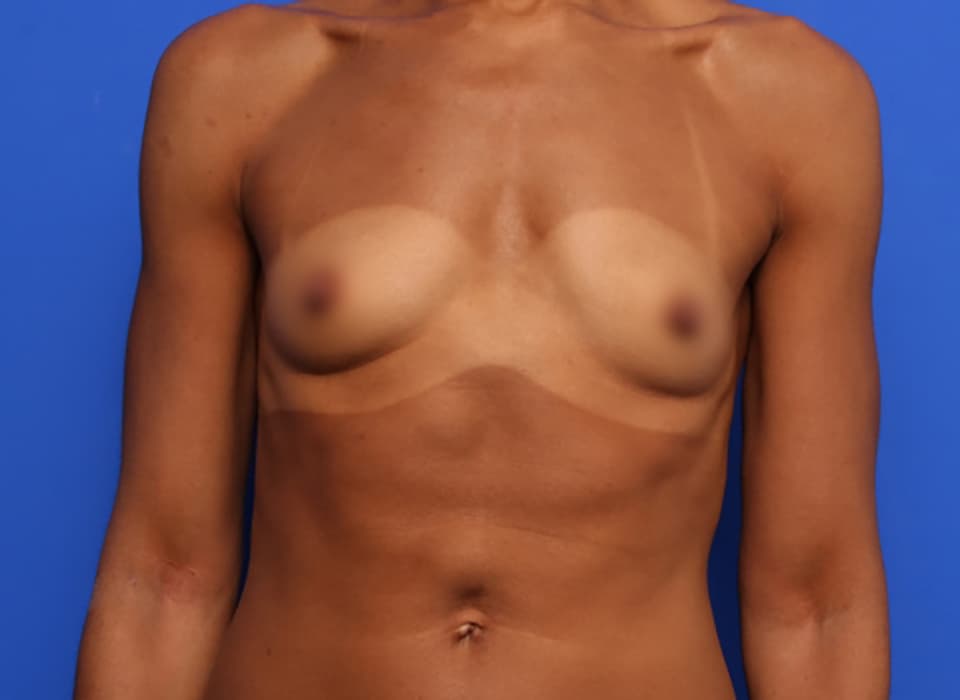
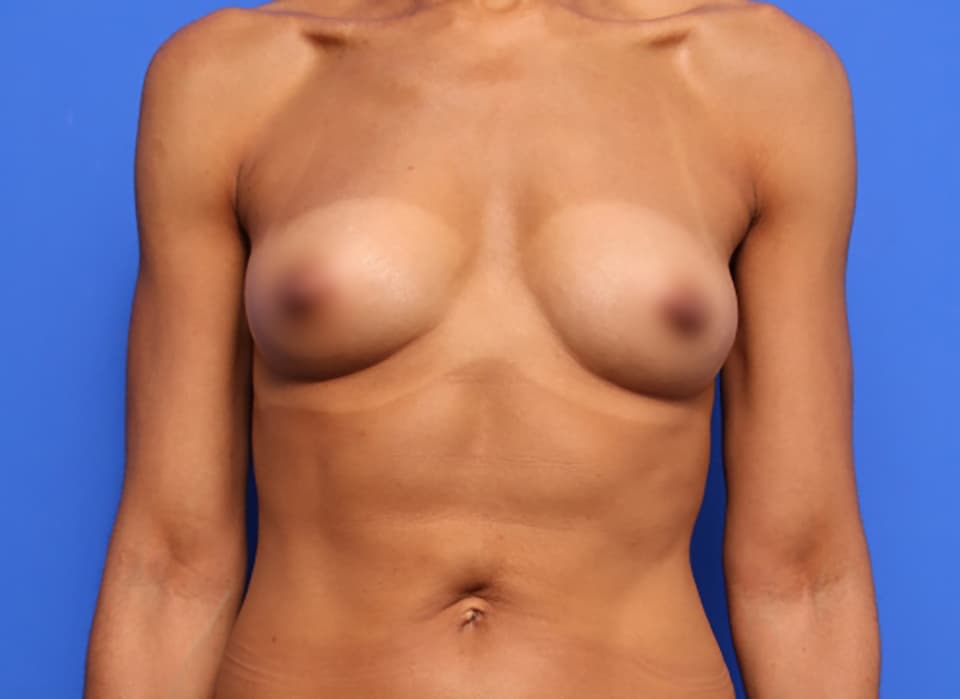
Fat Transfer Breast Augmentation patient age 40-50
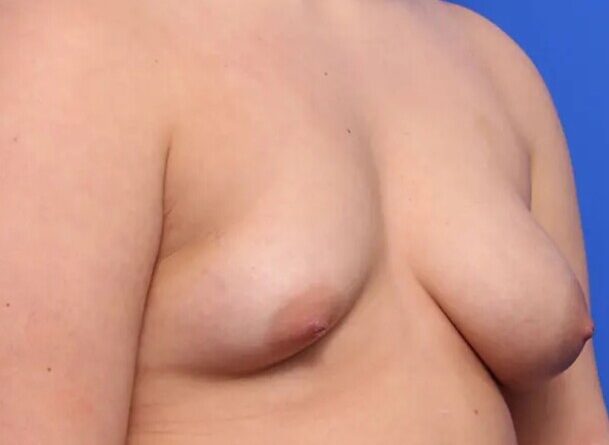
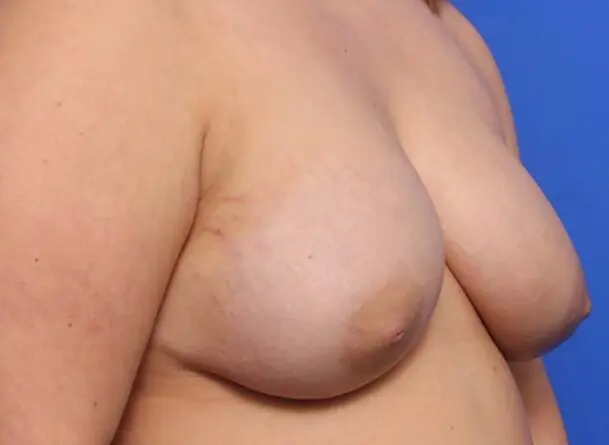
Fat Transfer Breast Augmentation patient age 18-24
Before & After Photos
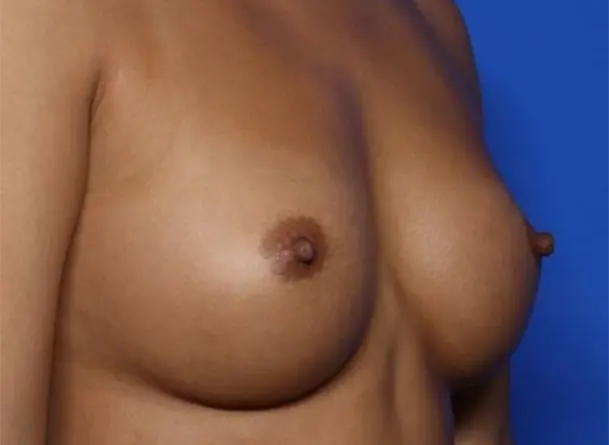
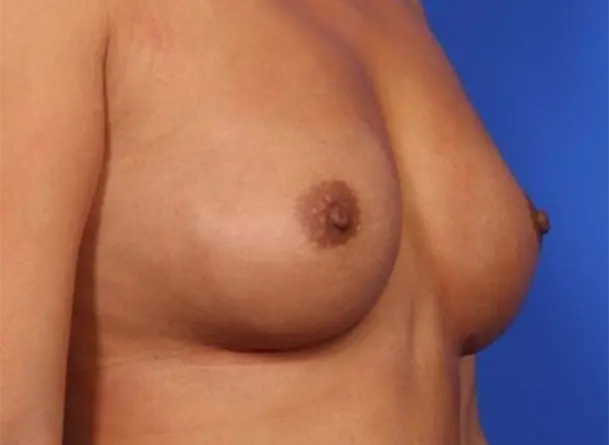
Implant replacement with fat transfer
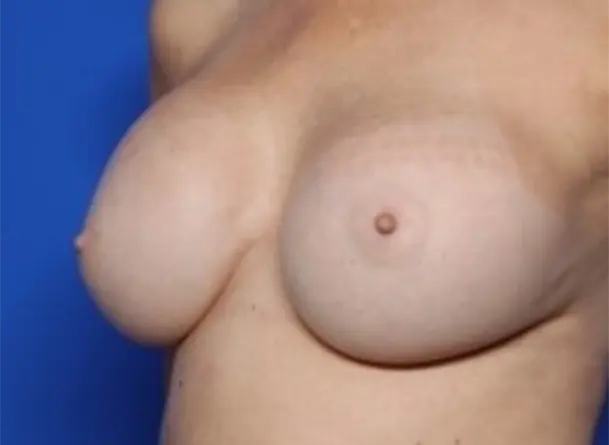
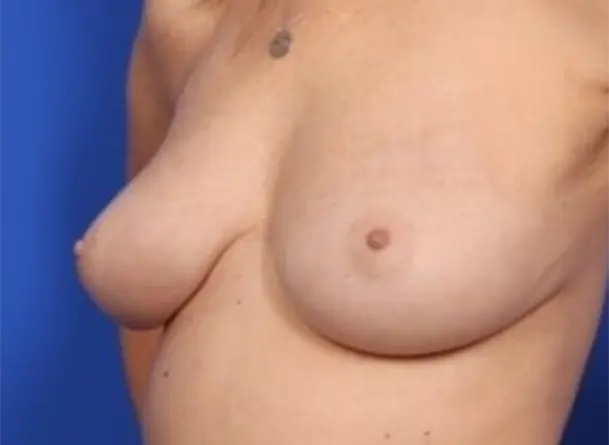
Implant replacement with fat transfer

Your Surgeon
Why Surgical Training Matters for Fat Transfer
Fat survival — the percentage of transferred fat that takes permanent root — is the single most important outcome variable in this procedure. It is determined almost entirely by technique: how the fat is harvested, how it is processed, and how precisely it is placed. These are not aesthetic judgments. They are surgical ones. As a board-certified plastic surgeon, Dr. Mess brings anatomical precision and published expertise in this technique that most providers offering fat transfer do not.
Dr. Sarah Mess is a board-certified plastic surgeon who has performed thousands of breast and body procedures since 2005. She holds faculty appointments at both Georgetown and Johns Hopkins and is board certified by the American Board of Plastic Surgery.
Dr. Mess is a Contributing Editor for Plastic and Reconstructive Surgery and the author of multiple peer-reviewed publications on fat transfer to the breast — including the first study to empirically test whether the public and plastic surgeons preferred lipoaugmentation over implants after implant removal. Her published work in this area includes:
- Lipoaugmentation following implant removal (PRS Global Open, 2018)
- Breast augmentation using abdominoplasty fat (Aesthetic Surgery Journal, 2016)
- Expanding indications for fat transfer to the breast (Advances in Cosmetic Surgery, 2021)
She has lectured on fat transfer at the International Society of Aesthetic Plastic Surgery and chaired panels on breast contour at The Aesthetic Meeting and Plastic Surgery The Meeting.
Credentials
- Board-Certified — American Board of Plastic Surgery (since 2007)
- Residency — MedStar Georgetown University Hospital
- Faculty Appointment — Johns Hopkins University, Instructor of Plastic Surgery
- Faculty Appointment — Georgetown University, Instructor of Aesthetic Surgery
- Contributing Editor — Plastic and Reconstructive Surgery
- VECTRA 3D Imaging available at consultation
- AAAASF-Accredited Surgical Facility
- Bilingual care in English and Spanish
- More than 500 breast procedures performed
Read more about Dr. Mess’s training, board certification, and approach to plastic surgery on her full biography page.
What Our Patients Are Saying
What Patients Say About Dr. Mess
“Dr. Mess and her team are kind, caring and incredibly competent…Their level of empathy and kindness in addition to their technical expertise is unparalleled. I highly recommend Dr. Mess to all my friends.”
“Dr. Mess and her staff are the absolute best. Everyone is friendly and caring. They all want you to have the best experience ever.”
“I could go on and on about how incredible this team is! If you need or want a procedure, you cannot go wrong with this wonderful surgeon and her caring team. I’d do it a thousand times!”
Frequently Asked Questions
Fat Transfer Breast Augmentation — FAQs
About a half to one cup size in a single session. Larger increases are possible across two staged sessions or with a mega-volume technique. Patients seeking two or more cup sizes in one operation are typically better served by implants or a combination of fat transfer and implants. Published data supports a mean volume retention of 62.4%, so Dr. Mess will walk you through realistic projections at your consultation.
The fat that survives the first 6 months is yours for life. Roughly 60%–70% of transferred fat remains stable in the breast long term, per a systematic review of 22 studies and 3,565 patients in Aesthetic Surgery Journal. Stable weight protects your result. Major weight gain or loss will change the size of your breasts the way it would any other fatty area of your body.
Both are safe when performed by a board-certified plastic surgeon. Fat transfer avoids implant-specific risks like capsular contracture, implant rupture, and BIA-ALCL. It carries its own risks — primarily fat necrosis, oil cysts, and microcalcifications. The 2009 ASPS Fat Graft Task Force report in Plastic and Reconstructive Surgery concluded that available evidence did not support an association between fat grafting and increased breast cancer rates, while recommending continued surveillance.
You will still get standard mammograms, and breast imaging remains effective after fat transfer. Some patients develop microcalcifications that radiologists can usually distinguish from those of concern. Tell your radiologist about your fat transfer history at every screening so they can interpret your images accordingly.
Yes. Common combinations include tummy tuck, liposuction of multiple sites, breast lift, and implant removal. Combining procedures adds operative time and recovery considerations that Dr. Mess will review during your consultation.
You will wear a soft surgical bra — not a tight compression bra. Pressure on the breasts in the early weeks reduces blood supply to the newly transferred fat and lowers how much survives. Compression garments do go on the liposuction donor sites.
Final breast shape and size are typically visible 4 to 6 months after surgery, once swelling has resolved and the fat that did not survive has been reabsorbed.
Yes. Dr. Mess performs all fat transfer breast augmentation procedures personally. She is both the surgeon and the published researcher in this technique.
Yes. Dr. Mess’s practice serves patients throughout Columbia, Howard County, Baltimore, and the greater Washington, D.C. region. Patients also travel from Annapolis and across Maryland for fat transfer procedures. If you are not local, we offer virtual consultations to discuss your goals before your in-person visit.
Schedule Today
Ready for Fuller Breasts Without an Implant? Schedule Your Consultation With Dr. Mess.
Dr. Mess will tell you what is achievable with your anatomy — and what is not. If fat transfer is not the right fit, she will tell you that too.
Our practice serves patients from Columbia, Howard County, and Baltimore. Patients also travel from Annapolis and Washington, D.C. In-person and virtual consultations are available. Call (410) 910-2350 or book online.
Explore Related Procedures
For patients seeking breast volume without surgery or downtime, Dr. Mess offers alloClae™ non-surgical breast enhancement. For patients who want to address both breast volume and skin laxity in one operation, she also performs breast lift surgery.
References & Citations
References
- Davis MJ, Perdanasari AT, Abu-Ghazaleh A, et al. Application of Fat Grafting in Cosmetic Breast Surgery. Seminars in Plastic Surgery. 2020;34(1):24–29. https://doi.org/10.1055/s-0039-1700958
- Al Sufyani MA, et al. Autologous Fat Transfer for Breast Augmentation: A Review. Dermatologic Surgery. 2016;42(11):1235–1242. https://doi.org/10.1097/DSS.0000000000000791
- Chopan M, et al. Autogenous Fat Grafting to the Breast and Gluteal Regions: Safety Profile Including Risks and Complications. Plastic and Reconstructive Surgery. 2019;143(6):1625–1632. https://doi.org/10.1097/PRS.0000000000005617
- Mess SA. Lipoaugmentation following Implant Removal Preferred by Plastic Surgeons and the General Public. Plastic and Reconstructive Surgery Global Open. 2018;6(8):e1882. https://doi.org/10.1097/GOX.0000000000001882
- Groen JW, et al. Autologous Fat Grafting in Cosmetic Breast Augmentation: A Systematic Review on Radiological Safety, Complications, Volume Retention, and Patient/Surgeon Satisfaction. Aesthetic Surgery Journal. 2016;36(9):993–1007. https://doi.org/10.1093/asj/sjw105
- Wu Y, et al. Autologous Fat Transplantation for Aesthetic Breast Augmentation: A Systematic Review and Meta-Analysis. Aesthetic Surgery Journal. 2021;41(6):NP402–NP429. https://doi.org/10.1093/asj/sjaa364
- Gutowski KA; ASPS Fat Graft Task Force. Current Applications and Safety of Autologous Fat Grafts: A Report of the ASPS Fat Graft Task Force. Plastic and Reconstructive Surgery. 2009;124(1):272–280. https://doi.org/10.1097/PRS.0b013e3181a09506
Dr. Sarah Mess has either authored or reviewed and approved this content. Page Updated


